
By the Blocktec Editorial Team
A life cycle assessment comparing two interior wall designs found that autoclaved aerated concrete blocks (AACB) produced 35% less CO2-equivalent emissions than concrete hollow blocks (CHB). The findings were published on 6 November 2026. The study also found that CHB walls were the cheaper option, though the authors still judged AACB the better overall choice.
What The Study Compared
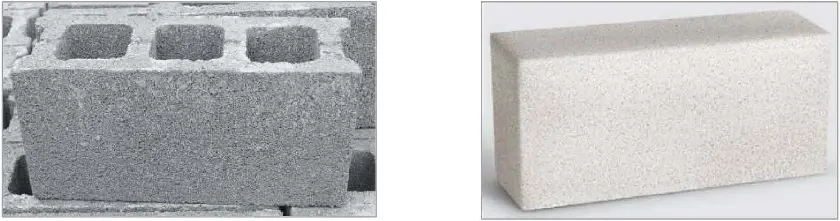
The researchers built a life cycle assessment (LCA) process network for two models of a building's interior wall. One model used AACB. The other used CHB, the hollow block most Filipino builders know well.
An LCA tracks the environmental load of a product across its life, from making the raw materials to putting the wall in place. It counts inputs such as cement, adhesive, steel, sand, electricity, fuel and freight transport, then adds them up so two designs can be compared on the same basis.
The submitted text did not disclose the study's authors, publication or date of the underlying research, so this article reports the findings as described and does not name them.
Cement Is The Biggest Driver
Apart from producing the blocks themselves, cement production carried the largest environmental impact of any input in the study. It ranked ahead of adhesive, steel, sand, electricity, fuel and freight transport.
In plain terms, the bags of cement going into a wall weigh more on the environment than the trucks hauling the materials or the power running the plant. That matters because cement is part of both wall types, so any change in how much cement a wall system needs, or how it is made, moves the totals.
The Numbers
The study reports results at two levels. Endpoint results show the end effect on people, nature and resources. Midpoint results show specific pollution categories.
Endpoint results for AACB compared with CHB:
- Human health damage, measured in DALY (disability-adjusted life years), was 38% lower.
- Ecosystem damage, measured in species-years, was 33% lower.
- Resource use was 0.61% lower, a very small gap compared with the other two.
The three highest-impact midpoint categories were CO2 emissions, fine particulate matter formation and human carcinogenic toxicity. In those categories, the AACB wall showed:
- 35% less CO2 equivalent (kg CO2 eq).
- 40% less fine particulate matter (kg PM2.5 eq). PM2.5 is the tiny dust and smoke particles that people breathe in.
- 63% less carcinogenic emissions to urban air (kg 1,4-DCB eq).
The Cost Result
The study did not find AACB ahead on every measure. On cost, the authors found CHB interior walls more advantageous than AACB. The submitted text gives no peso figures or cost breakdown, so the size of the gap is not known.
Even so, the authors concluded that AACB is beneficial for the overall design and construction of a building. They credited its light weight, durability, fire resistance and fast installation, and above all its lower environmental impact.
What The Authors Recommend Next
The authors did not only point at CHB. Their recommendations go both ways:
- The CHB supply chain should adjust its construction practices to reduce impacts on human health, ecosystems and resources across the life cycle.
- AACB production should improve its by-product output.
- Future research should look at process and material production improvements as the main way to cut impact.
- Researchers should also explore recyclable materials, which could lower both cost and environmental harm.
What It Means For Builders In The Philippines
The honest reading is this: the study found AAC walls cleaner but CHB cheaper. If you are budgeting a project, do not stop at the price per block. Compare the full installed wall cost, because the block is only one line in the wall.
This is where the wall system matters. CHB walls usually need thick sand-cement plaster (palitada) on top. Blocktec's AAC blocks are laid with thin-bed adhesive and finished with skimcoat, so it is walang palitada. In Blocktec's own cost comparison, the wall system came out with up to about 21% savings versus hollow blocks, depending on the project. That is Blocktec's sample comparison, not a result from the study, and your numbers will vary with design, location and labor.
Speed is another factor. A trained mason with a helper lays about 10-12 m2 per 8-hour shift, and up to 20 m2 on straight runs. Faster installation can shorten schedules and cut labor days.
On performance, Blocktec's AAC products carry a 4-hour fire resistance rating and sound reduction up to STC 44 for a 150 mm wall in tested configurations. Blocktec holds the DTI-BPS Philippine Standard (PS) Certification Mark, License No. Q-6620, and its products comply with PNS ASTM C1691:2019 and ASTM C1693.
Our advice: ask for a side-by-side estimate that includes blocks, mortar or adhesive, plastering or skimcoat, labor and schedule. Then weigh that against the environmental and fire-safety benefits this study points to. Let the full wall cost decide, not the unit price alone.
Sources
- Ongpeng, Jason & Umali, M.V.. (2023). Life-cycle assessment of concrete hollow blocks and autoclaved aerated concrete blocks. 10.1201/9781003323020-386.
Want to see how the full installed cost compares for your project? Send your wall area or blueprints to sales@blocktec.ph or visit blocktec.ph for a free AAC wall-system estimate.